How to choose the right AI document management system

If you take a closer look at what truly holds a modern enterprise together, is it its valuation or brand reputation? Or is it something far more fundamental?
In reality, the strength of any organization lies in the integrity of its documentation. In highly regulated industries, documentation serves as proof of compliance, operational consistency, and organizational accountability.
However, many enterprises still deal with fragmented file storage, outdated document versions, and manual approval processes that slow down operations and increase compliance risks.
This is where a document management system becomes essential.
A modern document management system transforms scattered files into a structured, searchable, and controlled environment. It ensures that every policy, SOP, record, and report is properly created, managed, reviewed, and archived throughout its lifecycle.
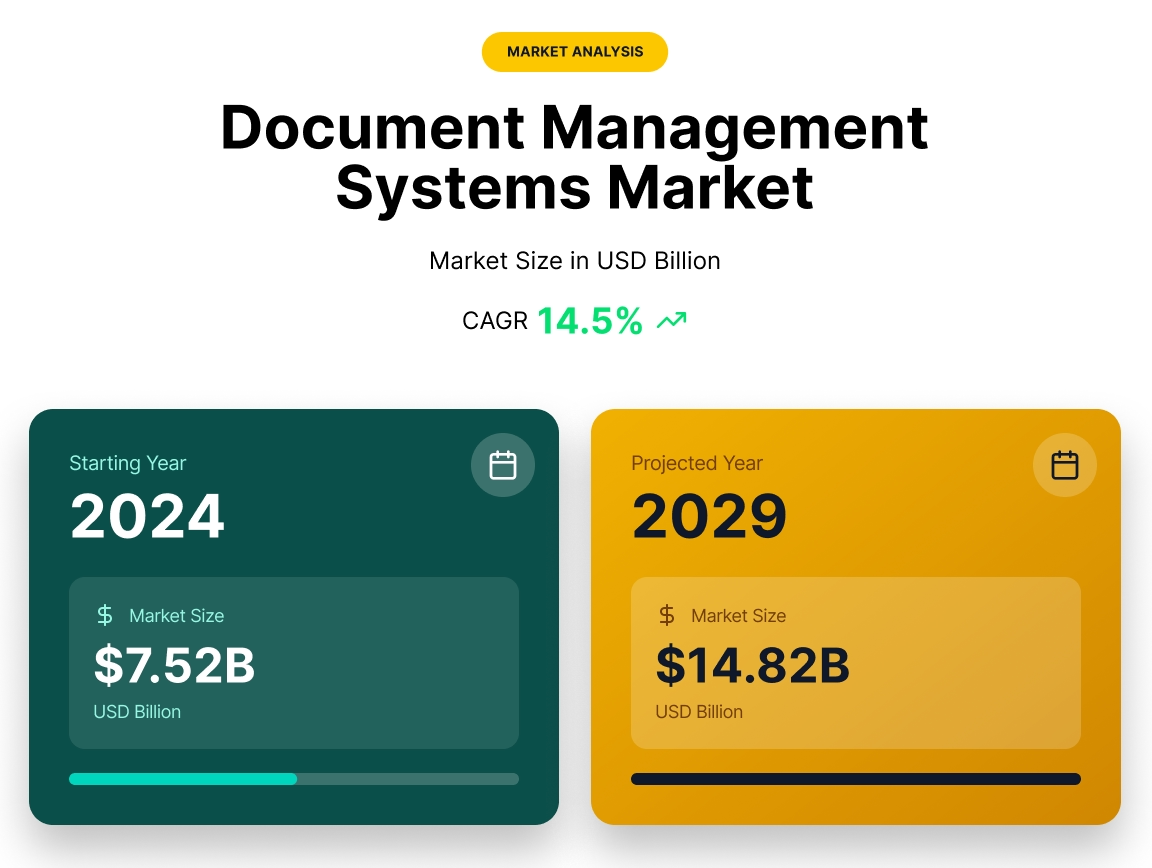
An effective Document Management System (DMS) acts as a central hub for secure, organized, and easily accessible documents. As organizations increasingly prioritize workflow efficiency and productivity, the demand for DMS solutions continues to rise. According to a recent market analysis by Mordor Intelligence, the global Document Management Systems market is expected to reach USD 14.82 billion by 2029, growing at a CAGR of 14.5% between 2024 and 2029.
Choosing the right AI document processing partner ensures teams save time, reduce operational costs, and automate document extraction and workflow processes without slowing down operations.
But selecting the right solution requires understanding what a modern AI-powered document management software should actually include.
Why Enterprises Are Moving Toward AI Document Management
Traditional systems were designed primarily for storing files. However, modern organizations generate vast volumes of unstructured data that require intelligent processing, classification, and governance.
This is where AI-powered document management software plays a critical role.
AI-driven platforms can automatically classify documents, extract information, detect duplicates, identify anomalies, and route files through intelligent workflows. Instead of manually organizing documents, teams can rely on document management software that continuously learns from enterprise data and improves operational efficiency.
For large organizations handling sensitive data, AI capabilities also strengthen enterprise document management by enabling automated metadata tagging, predictive search, and contextual insights. This allows employees to locate critical information faster while maintaining strict governance controls.
As digital transformation accelerates, companies increasingly rely on AI-enabled document management software to support scalability, compliance, and productivity.
Key Factors to Consider When Choosing an AI Document Management System
Selecting the right platform requires evaluating several strategic and operational factors. Below are the most important capabilities enterprises should prioritize.
1. Intelligent Document Capture and Processing
A modern document management system should go beyond storage and offer intelligent document capture capabilities.
AI-powered systems automatically scan, classify, and extract information from invoices, contracts, reports, compliance documents, and emails. This eliminates manual indexing and reduces the risk of human errors.
An advanced document management software solution can also process large volumes of structured and unstructured data, making it easier for organizations to scale operations without increasing administrative overhead.
By integrating AI-based document processing, organizations strengthen their enterprise document management strategy while improving operational speed and accuracy.
2. Strong Security and Access Control
Security is a critical consideration when selecting a platform, especially for organizations managing sensitive or regulated data.
A robust secure document management system ensures that documents are protected through encryption, role-based access control, audit logs, and activity monitoring.
A reliable secure document management system should also enable administrators to define granular permissions, ensuring that employees only access the documents relevant to their roles.
This level of control is essential for industries such as healthcare, finance, pharmaceuticals, and manufacturing, where maintaining a secure document management system is necessary to prevent data breaches and unauthorized access.
In enterprise environments, maintaining a secure document management system also helps organizations meet internal governance policies and industry regulations.
3. Document Lifecycle and Governance Management
Enterprises must manage documents throughout their entire lifecycle – from creation and collaboration to approval, archiving, and disposal.
A strong document governance framework ensures that documents follow standardized workflows and retention policies.
Modern AI-powered platforms support document governance by automating version control, tracking document changes, and maintaining a complete audit trail of approvals and edits.
Implementing effective document governance also helps organizations enforce standardized documentation practices across departments.
For companies handling large volumes of regulatory documentation, strong document governance capabilities are essential to maintain transparency, accountability, and operational consistency.
4. Compliance and Regulatory Support
Organizations operating in regulated industries must ensure that their documentation processes align with regulatory standards.
This is where regulatory compliance software capabilities become essential within a document management platform.
A modern system should include features such as automated compliance workflows, audit trails, electronic signatures, and validation checks. These capabilities help organizations maintain compliance with industry frameworks and standards.
Advanced regulatory compliance software features also allow organizations to track policy updates, monitor document approvals, and ensure that only the latest versions are used across teams.
For industries subject to strict regulations, integrating regulatory compliance software with enterprise documentation workflows helps reduce legal risks and simplify audits.
By embedding regulatory compliance software within the document lifecycle, companies can maintain continuous compliance without adding manual administrative tasks.
5. Data Governance and Metadata Management
With the exponential growth of enterprise data, organizations need robust governance mechanisms to manage and control information effectively.
This is where data governance tools become a key component of modern document platforms.
AI-powered systems use data governance tools to automatically classify documents, apply metadata, and enforce policies related to data ownership and retention.
Strong data governance tools also help organizations track how information flows across systems, ensuring that data is used responsibly and securely.
By integrating data governance tools within a document management system, enterprises can improve data quality, enhance transparency, and reduce the risk of mismanaged information.
Effective data governance tools also support regulatory compliance initiatives and enterprise-wide data strategies.
6. Workflow Automation and Collaboration
A major advantage of AI-enabled systems is the ability to automate workflows.
A modern document management software platform should allow organizations to configure automated workflows for document approvals, reviews, and policy updates.
These workflows streamline collaboration between teams while ensuring that documentation processes remain standardized and compliant.
When integrated with enterprise document management practices, workflow automation reduces delays, eliminates bottlenecks, and improves accountability across departments.
Organizations using AI-driven enterprise document management systems often experience faster decision-making and improved productivity because information flows seamlessly between teams.
Also read: Kagen Enterprise and the Emerging Paradigm of the Agentic Organization
7. Scalability and Enterprise Integration
For large organizations, scalability is a critical requirement.
An enterprise-grade enterprise document management solution should integrate easily with existing systems such as ERP platforms, CRM tools, compliance systems, and analytics platforms.
Integration capabilities ensure that documents remain connected to business processes and workflows rather than existing in isolated repositories.
As organizations grow, a scalable enterprise document management platform allows them to manage increasing volumes of documents without compromising performance or governance.
This scalability makes enterprise document management a foundational component of modern digital transformation strategies.
Benefits of Implementing an AI Document Management System
Implementing the right AI-powered document management system offers significant operational and strategic advantages for enterprises.
- Improved productivity: Automated workflows and intelligent search capabilities allow employees to locate documents faster.
- Enhanced compliance: Built-in regulatory compliance software ensures documentation processes align with regulatory requirements.
- Stronger security: A secure document management system protects sensitive information through encryption and access controls.
- Better governance: Integrated document governance policies ensure documents are properly managed throughout their lifecycle.
- Improved data management: AI-enabled data governance tools help organizations classify and manage enterprise information more effectively.
By combining these capabilities, organizations can transform documentation from a passive storage process into a strategic information asset.
Final Thoughts
Choosing the right AI-powered document management system is not just about storing files – it is about creating a foundation for intelligent information management.
A modern platform should combine AI-driven automation, advanced document governance, strong security, and integrated regulatory compliance software to support enterprise-scale operations.
When organizations adopt the right document management software, they gain the ability to manage complex documentation processes while maintaining transparency, compliance, and operational efficiency.
By prioritizing intelligent automation, robust data governance tools, and scalable enterprise document management capabilities, businesses can build a documentation ecosystem that supports long-term growth and innovation.
Frequently Asked Questions
1. What is an AI document management system?
An AI document management system is an advanced document management system that uses artificial intelligence to classify, organize, extract, and manage documents automatically. It improves enterprise document management by enabling faster search, automation, and intelligent workflows.
2. How is AI document management software different from traditional document management software?
Traditional document management software mainly stores and organizes files, while AI-powered systems automate document classification, data extraction, and workflow management. AI also strengthens document governance and improves efficiency across enterprise processes.
3. What features should you look for in a secure document management system?
A secure document management system should include encryption, role-based access control, audit trails, version control, and automated compliance workflows. These features help protect sensitive data while ensuring strong document governance and regulatory compliance.
4. How do data governance tools improve document management?
Data governance tools help organizations classify, manage, and control document data across systems. When integrated with a document management system, they ensure data accuracy, enforce policies, and support compliance requirements.
5. Why is regulatory compliance software important in document management?
Regulatory compliance software ensures that documents follow industry standards and regulatory policies. When integrated into a document management system, it helps organizations track document approvals, maintain audit trails, and simplify compliance reporting.