

Agentic AI-Led Legacy Modernization: Real-World Use Cases Across Industries
AI agents for software development are changing how enterprises approach one of their most expensive and complex technology challenges: legacy modernization. For decades, organizations have relied on aging applications, monolithic architectures, and outdated infrastructure to run mission-critical operations. While these systems continue to support core business functions, they often limit innovation, increase maintenance costs, and create barriers to AI adoption.
According to McKinsey, generative AI agents have the potential to dramatically improve modernization efforts by reducing technical debt, accelerating migration timelines, and improving the economics of large-scale transformation initiatives. The firm notes that AI can fundamentally change the cost-benefit equation of modernizing legacy technology estates.
At the same time, Gartner predicts that agentic software development will become increasingly mainstream, with over 65% of engineering teams using agentic coding expected to shift governance and validation toward automated platforms by 2027.
This convergence of agentic AI, automation, and software engineering is creating a new approach to legacy application modernization, one where intelligent agents can analyze, refactor, test, validate, and migrate applications with minimal human intervention.
In this blog, we'll explore how Agentic AI Legacy Modernization is transforming industries, the role of multi-agent systems, and real-world use cases demonstrating how organizations are achieving faster, more reliable modernization outcomes.
Why Legacy Modernization Has Become a Business Priority
Most enterprises still operate hundreds, or even thousands, of applications built over decades. These enterprise legacy systems often contain critical business logic but struggle to support modern customer expectations, cloud-native architectures, and AI-driven operations.
Common challenges include:
- Rising maintenance costs
- Technical debt accumulation
- Security vulnerabilities
- Limited scalability
- Integration challenges with modern platforms
- Lack of skilled resources familiar with legacy technologies
McKinsey estimates that technical debt can consume a significant portion of technology budgets, reducing an organization's ability to invest in innovation.
As businesses pursue digital transformation initiatives, legacy software modernization has become a foundational requirement rather than an optional upgrade.
This has elevated legacy system transformation from an IT project to a strategic business initiative within every enterprise modernization strategy.
What Is Agentic AI-Led Legacy Modernization?
Traditional application modernization relies heavily on manual effort. Teams spend months documenting applications, analyzing dependencies, rewriting code, testing functionality, and validating business logic.
Agentic AI for legacy modernization introduces autonomous agents capable of performing many of these activities independently.
Unlike conventional AI assistants that simply generate code snippets, agentic AI can:
- Understand modernization objectives
- Break down complex tasks
- Collaborate with other agents
- Execute workflows autonomously
- Validate outcomes
- Adapt based on feedback
This creates a new model of AI-powered modernization where software transformation becomes faster, more scalable, and significantly less resource-intensive.
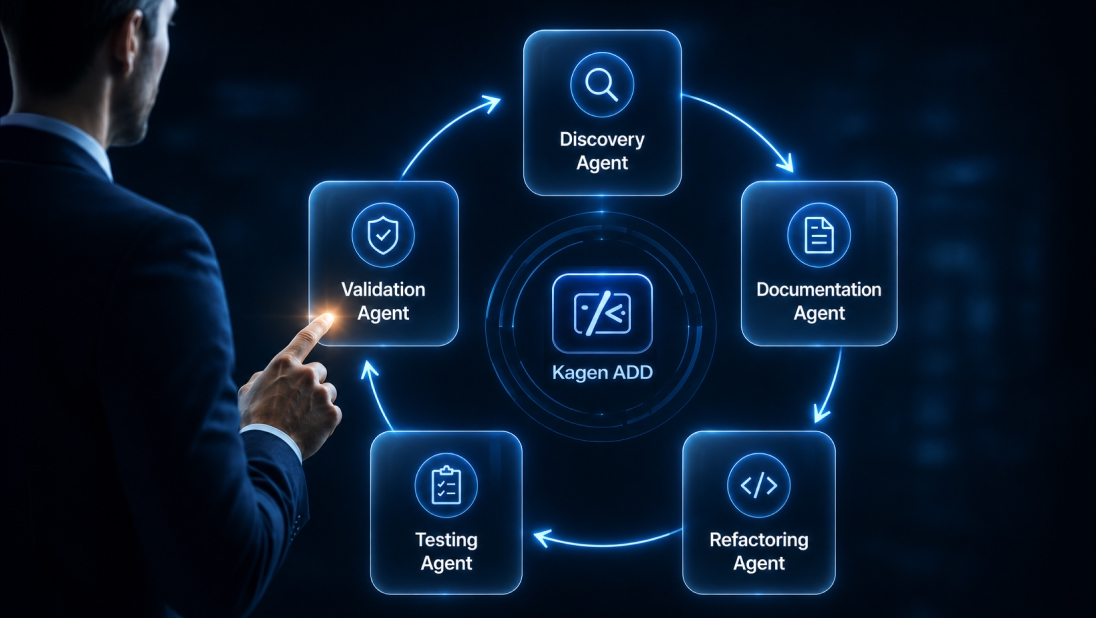
A typical multi-agent system for modernization may include:
- Discovery Agent: Maps application dependencies, architecture patterns, and data flows.
- Documentation Agent: Creates technical documentation from undocumented legacy code.
- Refactoring Agent: Rewrites legacy code into modern programming languages and frameworks.
- Testing Agent: Generates unit tests, integration tests, and regression test suites.
- Validation Agent: Ensures business rules remain intact throughout modernization.
Together, these agents enable autonomous software modernization at a scale that was previously impossible.
How Agentic AI Modernizes Legacy Applications
Traditional modernization projects often require extensive manual effort, from analyzing decades-old codebases to validating migrated applications. This process can take months or even years, especially when organizations are dealing with complex enterprise environments. Agentic AI changes this approach by introducing intelligent agents that can independently execute modernization tasks, collaborate with one another, and continuously learn from outcomes. Here's how the process works:
1. Automated Code Discovery and Assessment
One of the biggest challenges in legacy modernization is understanding what exists before deciding what to transform. Many enterprises operate applications that have evolved over decades, often with limited documentation and multiple dependencies spread across systems.
Agentic AI agents can automatically scan source code, databases, APIs, and infrastructure environments to create a detailed inventory of application assets. They identify dependencies, map workflows, detect redundant components, and uncover hidden technical debt. Instead of spending months on manual assessments, organizations gain a comprehensive understanding of their application landscape within days.
This automated discovery process provides the foundation for successful legacy application modernization by helping teams prioritize modernization efforts based on business value and technical complexity.
2. Business Logic Extraction and Documentation
Legacy applications often contain years of business knowledge embedded directly in the code. This includes pricing rules, approval workflows, compliance requirements, customer-specific processes, and operational logic that may not exist anywhere else.
Agentic AI can analyze millions of lines of code to identify and document these business rules automatically. Specialized agents work together to understand workflows, data relationships, and application behavior, creating clear documentation that was previously unavailable.
This capability significantly reduces modernization risk. By preserving critical business logic, organizations can confidently pursue legacy system transformation initiatives without worrying about losing functionality that supports core operations.
Also read: Brand-Safe AI Content Generation: 9 Governance Controls for Marketing Teams
3. Intelligent Code Refactoring and Migration
Once applications have been analyzed, AI agents begin the modernization process itself. Rather than simply rewriting code line by line, they evaluate architecture patterns, identify modernization opportunities, and recommend the most suitable migration approach.
For example, agentic AI can convert monolithic applications into microservices, migrate legacy frameworks to cloud-native architectures, transform outdated programming languages into modern alternatives, and optimize code for scalability and performance.
Because multiple agents can work simultaneously across different components of an application, modernization projects move significantly faster than traditional approaches. This makes AI-powered application modernization a practical solution for enterprises with large application portfolios.
4. Autonomous Testing and Validation
Testing is often one of the most time-consuming phases of software modernization. Every migrated application must be validated to ensure functionality, performance, security, and compliance remain intact.
Agentic AI addresses this challenge through autonomous testing. Dedicated testing agents automatically generate unit tests, integration tests, regression tests, and performance test scenarios based on the application's business requirements and architecture.
Validation agents continuously compare outputs from modernized systems against legacy environments to identify discrepancies before deployment. This approach not only accelerates delivery timelines but also improves software quality by reducing human error and increasing test coverage.
5. Continuous Optimization and Modernization
Unlike traditional projects that end after deployment, agentic AI enables continuous modernization. Once applications are modernized, AI agents continue monitoring performance, security, scalability, and operational efficiency.
They can identify optimization opportunities, recommend architecture improvements, detect emerging technical debt, and even implement approved changes automatically. This transforms modernization from a one-time initiative into an ongoing capability that supports long-term digital transformation goals.
As a result, enterprises can maintain modern, adaptable systems while continuously improving performance and reducing operational complexity.
Real-World Industry Use Cases of Agentic AI Legacy Modernization
Organizations across industries are leveraging agentic AI to accelerate modernization initiatives while reducing cost, risk, and operational disruption. Although modernization objectives vary by sector, the ability of autonomous agents to analyze, migrate, validate, and optimize applications is creating measurable business value across the board.
1. Banking and Financial Services
Financial institutions operate some of the most complex and heavily regulated technology environments in the world. Many banks still rely on mainframe systems and legacy applications developed decades ago to manage core banking operations, payments, loans, and customer data.
Agentic AI helps banks modernize these systems by automatically analyzing legacy code, extracting business rules, and generating cloud-ready architectures. AI agents can also validate compliance requirements throughout the migration process, ensuring critical financial workflows remain intact.
By modernizing legacy platforms, banks can accelerate digital product launches, improve customer experiences, strengthen security, and reduce the operational costs associated with maintaining outdated infrastructure.
2. Healthcare
Healthcare organizations often manage fragmented systems that support patient records, scheduling, billing, diagnostics, and clinical workflows. Many of these applications were built before modern interoperability standards existed, making integration and innovation difficult.
Agentic AI enables healthcare providers to modernize electronic health record systems and operational applications without disrupting patient care. Intelligent agents can map workflows, identify dependencies, automate documentation, and validate regulatory requirements throughout the modernization process.
The result is improved data accessibility, better patient experiences, enhanced interoperability, and a stronger foundation for adopting emerging technologies such as predictive analytics and AI-driven diagnostics.
3. Manufacturing
Manufacturers frequently rely on aging ERP platforms, inventory management systems, production scheduling tools, and supply chain applications. These systems often contain decades of operational knowledge but lack the flexibility required for modern manufacturing environments.
Agentic AI assists manufacturers by analyzing production systems, modernizing legacy applications, and integrating new technologies such as IoT sensors, real-time monitoring platforms, and predictive maintenance solutions.
This modernization effort helps organizations improve operational visibility, reduce downtime, optimize production processes, and build more resilient supply chains while preserving mission-critical business logic.
4. Retail and Commerce
Retailers must continuously evolve to meet changing customer expectations across online and offline channels. However, many organizations still operate legacy commerce platforms that struggle to support personalization, real-time inventory management, and omnichannel experiences.
Agentic AI accelerates commerce modernization by transforming monolithic applications into flexible, API-driven architectures. AI agents can automate code refactoring, streamline platform migrations, and ensure business processes remain functional during the transition.
Modernized commerce platforms enable retailers to launch new customer experiences faster, improve operational efficiency, and respond more effectively to market demands.
5. Telecommunications
Telecommunications providers manage highly complex operational support systems (OSS) and business support systems (BSS) that support network operations, service delivery, billing, and customer management.
Modernizing these environments traditionally requires significant time and resources due to extensive system interdependencies. Agentic AI simplifies this process by automatically mapping relationships across applications, documenting workflows, and generating migration strategies.
By modernizing core telecom platforms, organizations can improve service delivery, accelerate new product introductions, reduce operational costs, and support next-generation technologies such as 5G and edge computing.
6. Government and Public Sector
Government agencies often face unique modernization challenges due to aging technology infrastructure, budget constraints, and strict regulatory requirements. Many public-sector systems have been in operation for decades and support essential citizen services.
Agentic AI helps agencies modernize these systems by extracting institutional knowledge, documenting legacy processes, automating migration planning, and validating compliance requirements throughout the transformation journey.
This enables governments to improve citizen experiences, increase operational efficiency, strengthen cybersecurity, and deliver digital services more effectively while minimizing the risks associated with large-scale system replacements.
7. Insurance
Insurance companies frequently operate legacy policy administration systems, claims processing platforms, and underwriting applications that limit agility and innovation.
Agentic AI can modernize these environments by identifying business rules embedded within legacy code, automating system refactoring, and enabling seamless integration with modern digital channels.
As a result, insurers can accelerate claims processing, improve customer engagement, launch new products faster, and create more personalized experiences without rebuilding systems from scratch.
8. Logistics and Supply Chain
Logistics providers depend on legacy transportation management systems, warehouse platforms, and shipment tracking applications that often struggle to support real-time operations.
Agentic AI modernizes these environments by transforming disconnected applications into integrated digital ecosystems. AI agents can automate workflow discovery, optimize system architectures, and enable data sharing across supply chain networks.
This leads to improved visibility, faster decision-making, enhanced operational efficiency, and greater resilience in increasingly complex global supply chains.
Also read: Kagen ADD | Rebuilding the Enterprise SDLC for the Agentic AI Era
Benefits of AI-Driven Modernization
Organizations pursuing AI-driven modernization are seeing benefits beyond cost reduction.
- Faster Time-to-Modernization: AI-assisted modernization can accelerate project timelines by 40-50% compared to traditional approaches.
- Reduced Technical Debt: AI agents continuously identify and address code inefficiencies, helping organizations reduce long-term maintenance burdens.
- Better Knowledge Preservation: Business logic extraction minimizes the risk of losing critical institutional knowledge during migration.
- Improved Software Quality: Automated testing and validation improve reliability while reducing human error.
- Lower Modernization Costs: Organizations can modernize larger portions of their technology estate without proportionally increasing engineering resources.
The Future of Legacy Modernization Is Agentic
The future of legacy modernization will increasingly be defined by intelligent, autonomous systems capable of understanding applications, preserving business logic, generating code, and validating outcomes at scale.
As enterprises continue investing in AI-driven transformation, Agentic AI Legacy Modernization will evolve from an emerging capability to a core component of every modernization roadmap.
Organizations that embrace agentic-driven software delivery platforms will be better positioned to reduce technical debt, accelerate innovation, and unlock the full value of their technology investments.
The question is no longer whether enterprises should modernize their legacy systems. The question is how quickly they can leverage legacy modernization with AI agents to turn aging technology into a competitive advantage.
Conclusion
Legacy modernization is no longer just about replacing outdated technology—it is about creating a foundation for agility, innovation, and future growth. As enterprises face increasing pressure to reduce technical debt, improve operational efficiency, and adopt AI-driven capabilities, agentic AI is emerging as a powerful catalyst for transformation.
By combining intelligent automation, autonomous decision-making, and coordinated execution, agentic AI can help organizations modernize legacy applications faster while preserving the business logic that keeps critical operations running.
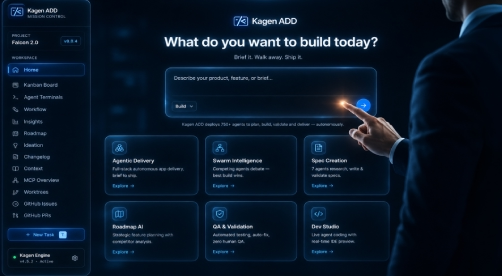
Kagen ADD brings this vision to life by orchestrating specialized AI agents across discovery, modernization, testing, and validation, enabling enterprises to accelerate transformation with greater speed, quality, and confidence. If you're looking to modernize legacy systems without slowing down business innovation, Kagen ADD can help you move from modernization planning to measurable outcomes. Let’s connect to our AI experts.



%20and%20Why%20It%20Will%20Replace%20Traditional%20SDLC/What%20Is%20Agentic-Driven%20Delivery%20(ADD)%20and%20Why%20It%20Will%20Replace%20Traditional%20SDLC%202%20thum.avif)